From drawings and samples to pre-shipment inspection, Incoterms and customs paperwork: the sequence that keeps a fenestration import on schedule.
Key takeaways
- Lock down a written specification and opening schedule before asking for a price; vague RFQs produce quotes that cannot be compared.
- Approve physical samples and stamped shop drawings before production starts. Changes after cutting are the most expensive changes.
- Book a pre-shipment inspection against your approved drawings, and check crating, labeling and packing lists, not only the product.
- Agree the Incoterm, HS classification and duty exposure with your freight forwarder and customs broker before you sign the order.
Importing windows and doors from China works when you treat it as a controlled project rather than a purchase: a frozen specification, approved samples and shop drawings, inspected production, export-grade packaging and a clear Incoterm. Most problems buyers report, such as wrong sizes, missing hardware, damaged glass or unexpected duties, trace back to a step that was skipped or left verbal. The checklist below follows the order in which a well-run order actually moves.
Step 1: What should be in your specification before you request a quote?
A fenestration quote is only as accurate as the information behind it. Before you contact any factory, assemble a package that a supplier's engineering team can price without guessing:
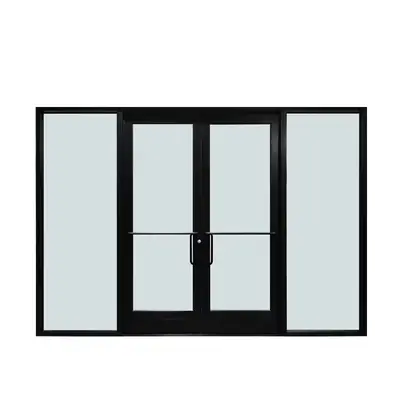
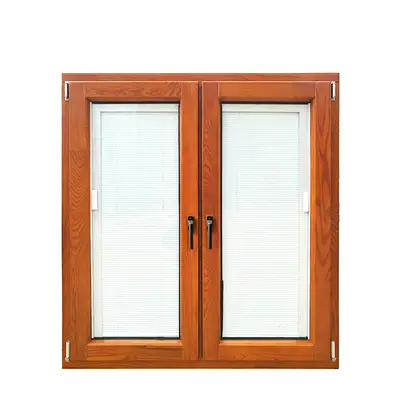
- Opening schedule with a unique tag for every unit, rough opening or frame size, quantity, operation type (fixed, casement, tilt & turn, sliding, lift & slide, bi-fold, pivot) and swing or handing.
- Elevations and sections from the architect, even if preliminary, so mullion positions and installation conditions are clear.
- Performance targets required by the jurisdiction: U-factor and SHGC for North America, Uw for Europe, design pressure or wind classification, air and water performance, and impact or bushfire requirements where applicable.
- Glazing make-up: double or triple insulating glass, Low-E position, gas fill, tempered or laminated lites, obscure or tinted glass.
- Finish and hardware: powder coat or anodized color references, interior and exterior colors if they differ, handle style, lock type and screen requirements.
- Installation method: nail fin, block frame, subframe or receptor, and whether trims or accessories are needed.
If you are still choosing systems, our product pages for aluminum windows and aluminum doors list the operation types we manufacture, which helps you write the schedule in terms a factory understands.
Step 2: How do you compare quotes from different factories?
Normalize quotes before comparing prices. Two suppliers may quote the same "double glazed thermal break casement" with different profile wall thickness, a different spacer, a different hardware brand and different packaging. Ask each supplier to state, line by line:
- Profile series, wall thickness and alloy temper (for example 6063-T5 or 6060-T66 extrusions).
- Thermal break type and width.
- Glass make-up per unit, including whether each lite is tempered or laminated.
- Hardware origin and model, and whether the locking is single-point or multi-point.
- Gasket material (EPDM or silicone) and sealing concept.
- Which certifications or test reports apply to the exact series quoted, not to the factory in general.
- Packaging method and what the price includes under the stated Incoterm.
Step 3: Samples and corner sections
Order a full-size sample of at least the most repeated unit, or a corner section if a full unit is impractical. Use the sample to check what drawings cannot show: finish consistency, corner joint quality, hardware feel, gasket fit, drainage path and how the glazing bead seats. Keep the approved sample sealed and labeled; it becomes the reference for the production inspection. For new-to-market products, a sample is also what your local installer, energy consultant or testing laboratory will want to see.
Step 4: Shop drawings and the approval loop
After deposit, the factory should issue shop drawings for every unit type: elevations with dimensions, sections through head, sill and jamb, glass specification, hardware positions and installation details. Review them with your architect and installer. Pay particular attention to:
- Frame dimensions versus rough openings, including the shim and sealant allowance your installer expects.
- Sill height and threshold details at doors, especially where accessibility or flush transitions are required.
- Mulling and stacking details for combined units.
- Handing and opening direction, which is easy to get wrong on mirrored floor plans.
Sign and date the approved set. Production should not start until it is returned. In our experience, the approval loop is where schedule is most often lost, because comments arrive in fragments; consolidate them into one marked-up set per revision.
Step 5: Production and in-process quality control
Ask for a production schedule with milestones: profile extrusion or receipt, finishing, cutting and machining, assembly, glazing and packing. Reasonable in-process checks include profile wall thickness and coating thickness, corner joint strength, glass labels showing the certification marks for the insulating glass, and hardware counts against the bill of materials. Photo or video updates at each milestone cost the factory little and give you early warning of problems.
Step 6: Pre-shipment inspection
A pre-shipment inspection, done by your own staff or a third-party inspection company, should be performed against the approved shop drawings and sample, not a generic checklist. Typical items:
| Check | What to look for |
|---|---|
| Dimensions | Frame width, height and diagonals on a sample of each unit type, within the tolerance agreed in the contract. |
| Finish | Color match to the approved sample, coating coverage, scratches and dents on exposed faces. |
| Operation | Sashes and panels open, close and lock smoothly; tilt & turn and lift & slide hardware cycle correctly. |
| Glass | Correct make-up, tempered or laminated marks where specified, clean IGU edges, no visible seal defects. |
| Sealing | Continuous gaskets, closed corners, weep holes open and unobstructed. |
| Labeling | Unit tags match the opening schedule; performance labels applied where required. |
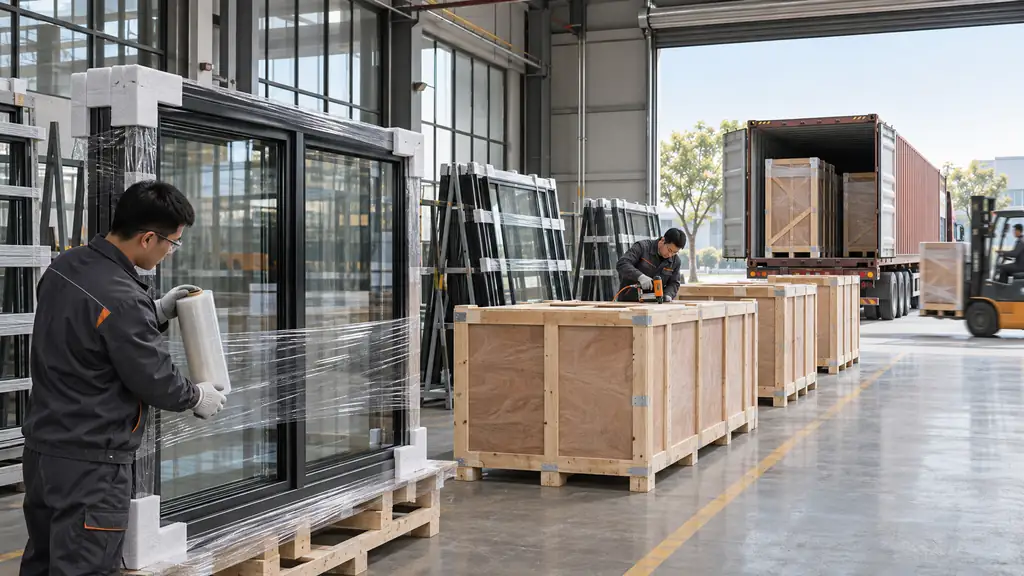
| Packing | Protective film, corner guards, crate construction and crate marks matching the packing list. |
Release the balance payment only after the inspection report is accepted and any corrective actions are photographed.
Step 7: Packaging for ocean freight
Windows and doors are heavy, glass is fragile, and an ocean container experiences shock, vibration and humidity cycles. Specify the packaging in writing. Many of our product lines ship with a multi-layer protection system (on several series this is a 5-layer packaging specification) and plywood crates. Engineered plywood is generally outside the ISPM 15 treatment requirement that applies to solid wood packaging, which simplifies biosecurity at destination, but rules differ by country, so confirm with your broker. Ask that crates be numbered, that each crate list the unit tags inside it, and that crates be loaded in installation sequence when the site schedule matters.
Step 8: Which Incoterm should you choose?
The Incoterm decides where risk and cost transfer from seller to buyer. The most common options for fenestration imports are summarized below (Incoterms 2020).
| Term | Seller delivers | Typical use |
|---|---|---|
| EXW | At the factory, not loaded | Buyers with their own China logistics; leaves export clearance with the buyer, which is often impractical. |
| FCA | To the buyer's carrier at a named place | The ICC-recommended term for containerized goods handed over before loading on the vessel. |
| FOB | Loaded on board at the named port | Very common in practice; buyer controls ocean freight and insurance. |
| CIF / CIP | Seller pays freight and minimum insurance to destination | Convenient for smaller buyers; risk still transfers at origin. |
| DAP / DDP | At the named destination, without or with import duties paid | Turnkey delivery; DDP requires the seller to act as importer, which is not possible in every market. |
Whatever term you use, buy cargo insurance with adequate coverage, because the minimum cover under CIF and CIP rarely matches the replacement cost of a custom glazing order.
Step 9: Customs paperwork and duty exposure
Expect to need a commercial invoice, packing list, bill of lading and, depending on the destination, a certificate of origin, packaging declarations and product-specific documents. Classification matters: aluminum doors and windows, wood windows and wood doors fall under different tariff headings, and the duty rate follows the classification. In the United States, importers of aluminum products from China should have their customs broker review current trade-remedy measures, including antidumping and countervailing duty orders on aluminum extrusions, because scope can depend on how the product is configured and shipped. US ocean shipments also require an Importer Security Filing before loading. Australia, Canada, New Zealand and the EU each have their own declarations and biosecurity requirements. Rules change, so treat your broker's current advice as the authority, not a supplier's assurance.
Step 10: Delivery, installation and after-sales support
Inspect crates on arrival before signing the delivery receipt, and photograph any damage. Store units upright, dry and protected from site traffic. Confirm installation instructions, anchor schedules and sealant compatibility with your installer before the first unit goes in. Ask the supplier how spare parts and replacements are handled; our product lines include online technical support and spare-parts provision, and several series carry extended warranties. If you want us to review a schedule or drawings before you commit, send them to our engineering team.
Common mistakes to avoid
- Approving price before glass make-up and hardware are defined.
- Assuming a certification on one series applies to every product from the same factory.
- Skipping shop drawings on "standard" sizes; standard in one market is not standard in another.
- Leaving duty classification until the goods are on the water.
- Paying the balance before inspection findings are closed.
Handled in this order, an import order from a capable factory is predictable. For related reading, see our guide to reading NFRC labels on imported windows.
Frequently asked questions
Do I need samples before placing a full window order from China?
Yes, for any first order or new product series. A full unit or corner section shows finish, joint quality, hardware and gasket fit that drawings cannot. The approved sample then becomes the reference standard for the pre-shipment inspection, giving both parties an objective basis for acceptance.
Which Incoterm is best for importing windows and doors?
FOB is the most common because the buyer controls ocean freight and insurance. FCA is the ICC-recommended alternative for containerized cargo. CIF or DAP suit buyers without a forwarder. Choose based on who manages freight best, and always buy cargo insurance that covers full replacement value.
What documents are needed for customs when importing windows?
Typically a commercial invoice, packing list and bill of lading, plus a certificate of origin and packaging or biosecurity declarations depending on the destination. US ocean imports also need an Importer Security Filing. Confirm tariff classification and any trade-remedy duties with a licensed customs broker before shipping.
How should imported windows be packed for ocean shipping?
Each unit should have protective film, corner and edge guards and cushioning between units, inside sturdy plywood crates designed for the unit weight. Crates should be numbered and marked with the unit tags they contain, and ideally loaded in installation sequence so site teams can unpack efficiently.
Related products