Aluminum conducts heat hundreds of times better than polyamide. Here is how thermal breaks work and how to judge one from a section drawing.
Key takeaways
- A thermal break separates the inner and outer aluminum with a low-conductivity material, cutting heat flow and condensation.
- Polyamide strips are the dominant method; pour-and-debridge polyurethane is common in North American systems.
- Wider breaks, insulating inserts and better glazing all improve whole-window performance; the glass usually has the largest effect.
- Judge a system by its section drawings and whole-unit ratings, not by the words 'thermal break' alone.
A thermal break aluminum window has its frame split into an interior and an exterior aluminum section, joined by a material that conducts heat poorly, usually glass-fiber-reinforced polyamide strips. This interrupts the path heat would otherwise take straight through the metal, reducing energy loss and keeping the interior frame warmer to limit condensation. The width and design of the break, the insulating inserts and the glazing together determine how well the window performs.
Why does aluminum need a thermal break?
Aluminum is strong, light, durable and easy to extrude into complex shapes, which is why it dominates commercial facades and modern residential windows. It is also a very good conductor of heat. The thermal conductivity of aluminum alloys is in the order of 160 to 200 W/m·K, while glass-fiber-reinforced polyamide is about 0.3 W/m·K, a difference of several hundred times. A solid aluminum frame acts as a thermal bridge between the inside and outside, causing heat loss in winter, heat gain in summer and cold interior surfaces where condensation and, eventually, mold can form.
Non-thermally broken aluminum windows may still be acceptable in mild climates or for some interior applications, but energy codes in North America, Europe, Australia and New Zealand have made thermally broken frames the norm for most exterior applications. Requirements depend on the jurisdiction and climate zone, so always check local code.
What types of thermal break are there?
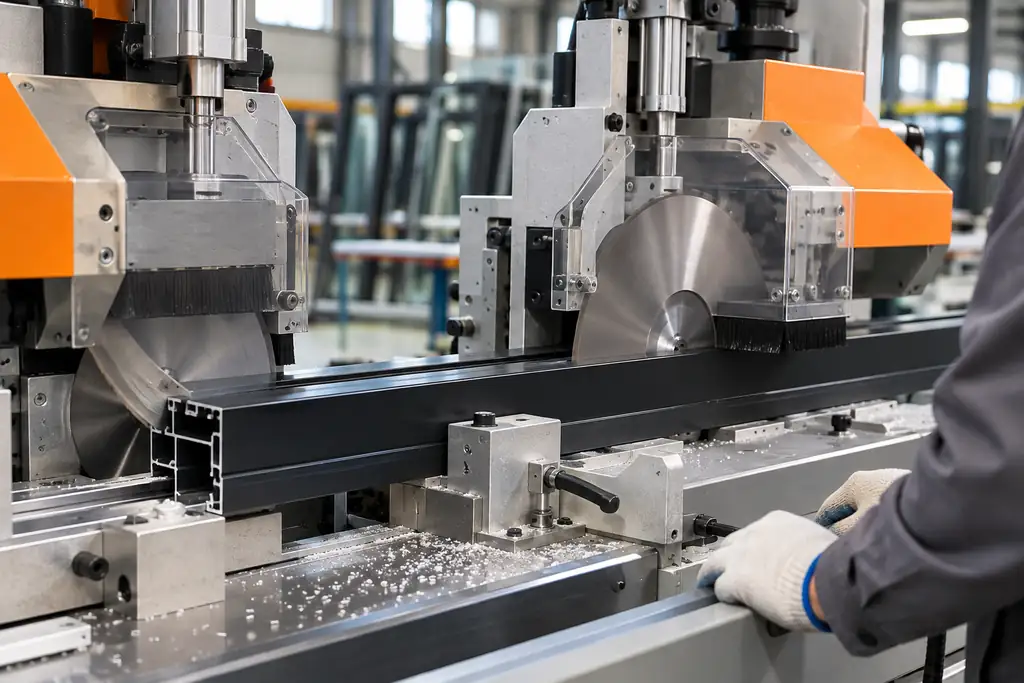
Polyamide strip (insulating strip) systems. The inner and outer aluminum profiles are extruded separately, then joined by polyamide strips that are rolled or crimped into channels in each profile. This is the most widespread method worldwide. Strip width can be increased to improve performance, and the strips can be shaped to support insulating foam inserts or create multiple chambers.
Pour-and-debridge systems. A single aluminum extrusion has a channel into which liquid polyurethane is poured. When cured, the aluminum bridge at the bottom of the channel is cut away (debridged), leaving the polyurethane as the only connection. The break is usually narrower than strip systems, which limits thermal performance, but the method is efficient for high-volume production and common in North American storefront systems.
| Feature | Polyamide strip | Pour and debridge |
|---|---|---|
| Typical break width | From about 14 mm to well over 30 mm in high-performance systems | Typically narrower |
| Design flexibility | High; shaped strips, multiple chambers, foam inserts | Lower |
| Dual-color capability | Easy; inner and outer profiles finished separately | Possible with care |
| Common markets | Europe, Asia, Australia, NZ, North American high-performance | North American commercial |
Why polyamide strips allow different interior and exterior colors
Because the inner and outer aluminum profiles are separate pieces before assembly, they can be powder coated or anodized in different colors. A black exterior and a white or wood-grain interior is a common example. This flexibility is one reason polyamide strip systems dominate residential window markets.
Does a wider thermal break always mean a better window?
A wider break improves the frame's thermal resistance, but the whole-window result depends on several factors:
- Glazing: in a typical window, the glass is the largest area. Moving from clear double glazing to Low-E with argon, or to triple glazing, usually affects the whole-window U-factor more than widening the break.
- Insulating inserts: foam inserts in the thermal break cavity reduce convection and radiation inside the frame.
- Glazing rebate design: the depth to which the glass sits in the frame and the spacer type affect edge losses.
- Gasket design: center gaskets in casement and tilt and turn frames create separate chambers, improving thermal and acoustic performance.
- Frame proportion: slim frames have smaller frame areas, so frame performance affects the whole unit less.
Judge a system by its whole-product rating for the configuration you need. In North America, that means NFRC-rated U-factor; in Europe, Uw values calculated or tested to EN ISO 10077 and EN ISO 12567.
How do thermal breaks control condensation?
Condensation forms on surfaces colder than the dew point of the indoor air. A thermally broken frame keeps the interior aluminum closer to room temperature, reducing the chance of condensation on the frame. In cold climates, specify warm-edge spacers and triple glazing to keep the glass edge warm as well. Also manage indoor humidity with ventilation, particularly in new construction where materials are drying out. The NFRC Condensation Resistance rating and frame temperature factors help compare products.
Do thermal breaks matter in hot climates?
Yes. Thermal breaks are often discussed in terms of winter heat loss, but they work in both directions. In hot climates such as Texas, Florida, northern Australia or the Middle East, a non-broken frame conducts solar-heated exterior temperatures to the interior, adding to cooling loads and making frames uncomfortably warm to touch. Air-conditioned interiors in humid climates can also experience condensation on the exterior face of glass and frames in certain conditions. In hot climates, pair a thermally broken frame with solar control Low-E glass, and check the SHGC requirements of your energy code alongside the U-factor.
Do thermal breaks weaken the frame?
The thermal break must transfer shear between the inner and outer profiles so the frame acts as a composite section. Properly designed polyamide strips, glass-fiber reinforced and mechanically rolled into knurled profile channels, achieve high shear strength. For large openings and high wind loads, structural calculations should account for the composite behavior, and some designs add steel or aluminum reinforcement. Polyamide also tolerates powder coating temperatures, which is important for factory finishing after assembly.
Thermal breaks in doors and sliding systems
Hinged doors use the same thermal break principles as casement windows, with insulated cores in opaque panels. Sliding and lift and slide doors are more difficult, because panels must move past each other and the bottom track carries rollers. Good systems break the track itself, use thermally broken interlocks, and include insulating inserts in the sash. The threshold is often the weakest point thermally, especially with flush or low thresholds, where the aluminum may run continuously from outside to inside unless the design includes a dedicated thermal separation. For cold climates, ask how the sill and interlock are thermally broken, not only the sash.
Common misconceptions
- "Thermal break" is a performance rating. It is not. The term only describes the construction; performance varies widely between systems.
- Aluminum cannot be energy efficient. Modern thermally broken systems with high-performance glass meet demanding energy codes in many climates.
- Only the frame matters. In most windows, the glass area is larger than the frame area, so glazing has a large effect on the whole-unit rating.
- Thermal breaks eliminate condensation. They reduce risk, but indoor humidity and the glass edge also play a role.
Alloys, wall thickness and finish
Window and door profiles are commonly extruded from 6060 or 6063 alloys in T5 or T6 tempers, which balance strength, extrudability and surface finish. Our product documentation lists, for different series, 6063-T5, 6063-T6 and 6060-T66 thermal break profiles, with profile wall thickness up to 2.0 mm on many series. Wall thickness affects stiffness, screw retention and hardware fixing strength; ask the supplier to state it on drawings. Finishes include powder coating, anodizing and wood-grain transfer.
What should you ask a supplier?
- Which thermal break type and width does the series use, and are insulating inserts included?
- Can you provide section drawings showing the break and the glazing rebate?
- What are the whole-unit ratings for my configuration and glass make-up?
- What alloy, temper and wall thickness are used?
- Is the frame suitable for different interior and exterior colors?
- What are the structural limits for my design pressure and size?
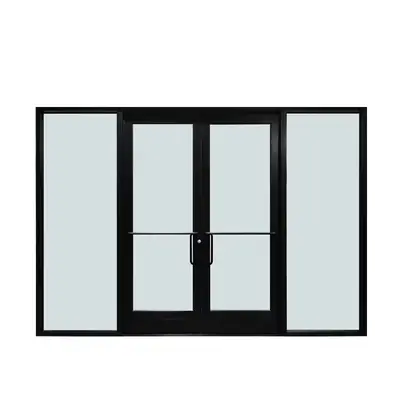
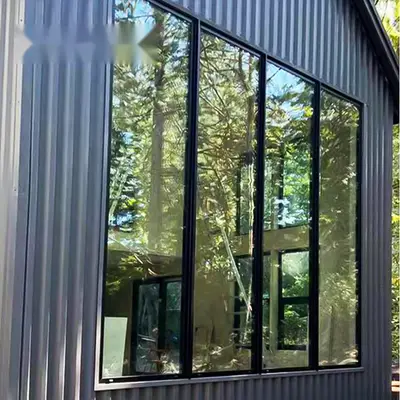
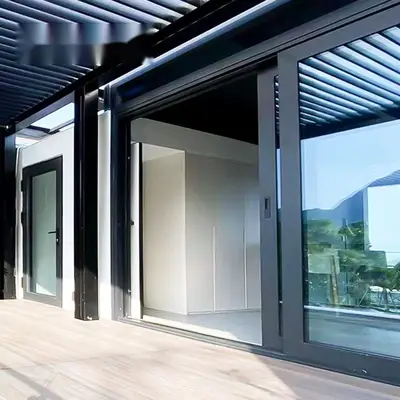
Ask, too, whether the supplier can provide physical corner samples so you can see the break, inserts and gasket arrangement yourself; a cut section reveals more about build quality than a brochure. Our aluminum windows and aluminum doors are built on thermal break profiles. For glazing choices that complement the frame, see our glazing guide, or contact us for section drawings of a specific series.
Frequently asked questions
What is a thermal break in an aluminum window?
It is a low-conductivity barrier, usually glass-fiber-reinforced polyamide strips, that separates the interior and exterior aluminum sections of the frame. It interrupts heat flow through the metal, reducing energy loss and keeping the interior frame warmer to limit condensation.
Are thermal break aluminum windows as efficient as wood or uPVC?
Well-designed thermal break aluminum windows with Low-E insulating glass can achieve competitive whole-unit ratings, especially with wide breaks and insulating inserts. Aluminum frames are slimmer and stronger, which suits large glass. Compare whole-unit ratings for the specific configurations rather than generalizations by material.
How wide should a thermal break be?
There is no single correct width. Wider breaks improve frame performance, and high-performance systems use substantially wider strips with insulating inserts. Because glazing usually dominates whole-window performance, choose based on the whole-unit rating your climate and energy code require for the configuration.
Can thermal break windows have different colors inside and outside?
Yes. With polyamide strip systems, the interior and exterior aluminum profiles are separate before assembly, so each can be powder coated or anodized in a different color, such as a black exterior with a white or wood-grain interior.
Related products